
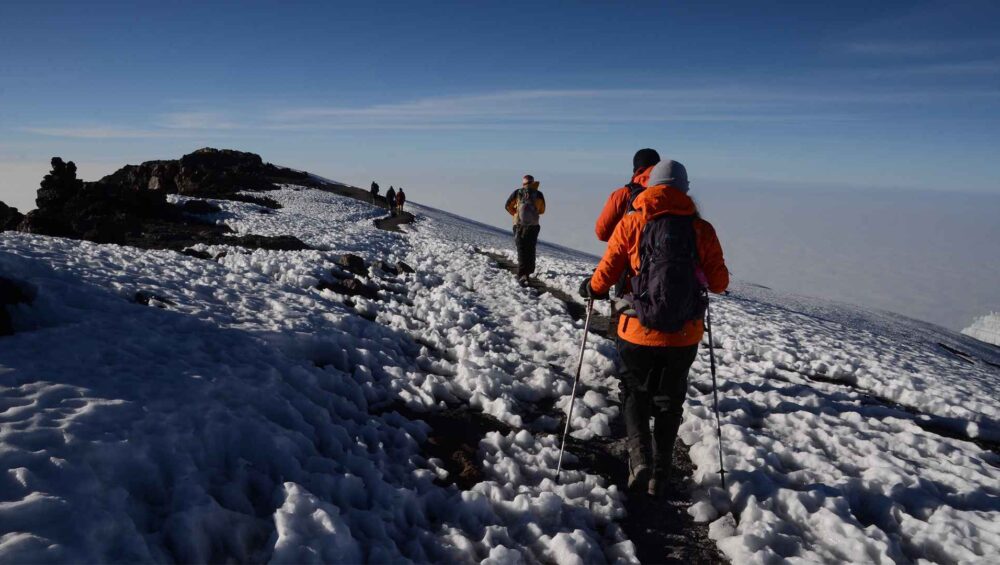
Mount Kilimanjaro, the towering giant of Africa, presents a unique challenge for trekkers, not just due to its height but also because of the varying environmental conditions. Among the myriad strategies climbers employ to reach the summit, opting for a night climb is particularly prevalent. This decision is driven by several practical and experiential factors, each contributing to a successful and memorable ascent.
1. Optimal Summit Timing
A key factor driving the choice of night climbs is the timing of the summit experience. Climbers often start their final ascent from their last camp—typically Barafu Camp or Stella Point—late in the evening or the early hours of the morning. This timing is carefully planned to ensure they reach Uhuru Peak, the summit of Kilimanjaro, at sunrise.
Advantages of Summiting at Dawn:
- Breathtaking Views: Arriving at the summit at dawn provides climbers with the chance to witness the sun rising over the vast African plains. The sight of the sun’s first light illuminating the snow-capped peak and casting a golden hue over the surrounding landscape is both dramatic and awe-inspiring. This moment is often described as one of the most beautiful and rewarding experiences of the trek.
- Photographic Opportunities: Sunrise at the summit offers perfect lighting conditions for photography. The early morning light enhances the visibility of Kilimanjaro’s glaciers and the surrounding landscape, making it an ideal time for capturing stunning images of the summit and its panoramic views.
2. Avoiding Daytime Warmth and Glacier Melting
The temperature on Kilimanjaro’s summit can be frigid, but the sun’s rays can cause significant melting of glaciers and ice formations during the day. Climbing at night helps avoid the daytime warmth that can lead to:
- Glacier Preservation: The colder temperatures at night help maintain the structural integrity of the glaciers and ice fields. This preservation is crucial for trekkers who wish to experience Kilimanjaro’s iconic ice formations and frozen landscapes.
- Reduced Risk of Melting: Night climbs reduce the risk of ice melting, which can lead to dangerous conditions like rockfalls and loose terrain. Climbing under cooler conditions ensures a more stable and safer environment.
3. Better Acclimatization
Proper acclimatization is vital for high-altitude trekking. Climbing at night allows trekkers to take advantage of the day for rest and preparation. This approach benefits climbers in several ways:
- Gradual Ascent: The night climb strategy involves a gradual ascent, with climbers typically spending a few hours at high altitudes before making the final push to the summit. This gradual approach helps the body adjust to the decreasing oxygen levels.
- Daytime Rest: By climbing at night, trekkers can use the daytime to rest, hydrate, and prepare mentally and physically for the final stretch. This rest period reduces the risk of altitude sickness and improves overall performance.
4. Psychological Advantages
The experience of climbing at night can offer several psychological benefits:
- Solitude and Focus: The darkness of night provides a unique sense of solitude and focus. With fewer distractions and a quiet environment, climbers can concentrate on their ascent and remain mentally prepared for the challenge.
- Sense of Achievement: Reaching the summit just as dawn breaks can be a profoundly satisfying experience. The combination of physical effort and witnessing the first light of day creates a strong sense of personal accomplishment and fulfillment.
5. Avoiding Crowds
Mount Kilimanjaro is a popular trekking destination, and the summit can become crowded during peak seasons. By opting for a night climb, trekkers can often:
- Experience Solitude: Night climbing helps avoid the bulk of the crowds that gather at the summit during the day. This leads to a more serene and intimate experience at the top.
- Enjoy a More Personal Experience: Fewer climbers at the summit means less congestion and more time to savor the views and celebrate the achievement without the rush or interference from other trekkers.
6. Enhanced Safety
Safety is a major consideration when climbing Kilimanjaro, and night climbs can offer several advantages:
- Stable Ice and Snow Conditions: Colder nighttime temperatures stabilize ice and snow, reducing the risk of slips and falls. This stability makes the ascent safer compared to climbing during the day when ice can be more precarious.
- Preventing Overheating: Climbing in the cooler temperatures of the night prevents overheating, a common issue when trekking in warmer daylight conditions. This helps maintain optimal physical performance and reduces fatigue.
7. Efficient Use of Time
A well-planned night climb can also enhance the efficiency of the trek:
- Maximized Summit Time: By reaching the summit at sunrise, climbers have the entire day to descend. This efficient use of time ensures a well-paced climb, allowing trekkers to enjoy their time at the summit and complete their descent without undue haste.
- Better Time Management: Starting the ascent at night and summiting early in the morning helps manage energy levels and allows for a more structured trekking schedule, balancing ascent, summit time, and descent.
Choosing a night climb to reach Kilimanjaro’s summit is a strategic decision that provides numerous benefits, from optimal timing for sunrise views and glacier preservation to improved acclimatization and safety. This approach not only maximizes the trekker’s experience but also enhances the overall enjoyment and sense of achievement. For those who are prepared to tackle the challenges of night climbing, the reward of witnessing Kilimanjaro’s summit at dawn is an unforgettable experience that stands as a testament to their perseverance and determination.


